
If you've noticed a dull film on your cat's teeth, or their breath isn't as fresh as it used to be, you're probably wondering about cat plaque removal at home. Plaque is a soft film that builds up every day, and daily care can keep it in check, even if your cat won't let you near them with a toothbrush.
Australian vets find some level of dental disease in 80% of cats and dogs over the age of three, according to the Australian Veterinary Association, and it usually starts with plaque. Here's the difference between plaque and tartar, what works at home, and where Purrlys® fits.
Key takeaways
- Plaque is soft and builds up every day. Tartar is plaque that has hardened.
- Brushing with a cat-safe toothpaste removes soft plaque, if your cat will let you.
- Purrlys® works differently: it works at the root cause, the plaque-causing bacteria.
- Hardened tartar needs your vet.
Plaque versus tartar
Plaque is a film on the teeth that harbours bacteria, as the Cornell Feline Health Center explains. When it hardens by absorbing minerals, it becomes tartar, also called calculus, which gives bacteria a rough surface to cling to. The vets at VCA Animal Hospitals say plaque can begin to harden within days.
That's why timing matters. Soft plaque can be managed at home, every day. Tartar can't be removed by brushing, and a scale and polish by your vet under an anaesthetic is usually needed, according to International Cat Care. Please don't scrape your cat's teeth at home. The vets at VCA warn that metal instruments can leave tiny scratches that make plaque build up faster.
Cat plaque removal with gentle brushing
Brushing removes soft plaque by rubbing it off where you can reach, and plaque starts building up again soon afterwards, so it needs doing every day. Introduce a cat toothbrush and cat-safe toothpaste slowly, with short, positive sessions. Cornell has a four-week training programme that takes it step by step. Never use human toothpaste, and if your cat's gums already look red or sore, check with your vet before you start.
Other home-care options
Some dental diets, treats or other products may suit a particular cat. Check what each product actually says it does, and ask your vet if you're unsure. For cats who won't be brushed, a powder mixed into their meals is often the easiest daily habit to keep.
Where Purrlys® fits
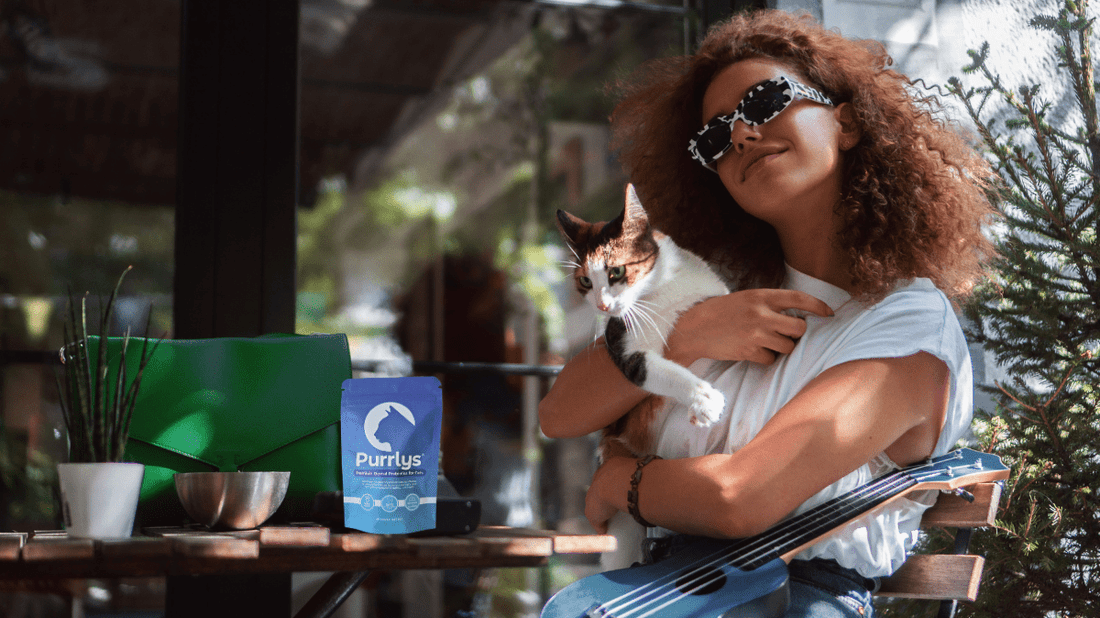
Purrlys® Premium Dental Probiotics for Cats is an odourless and tasteless daily powder, developed by Australian microbiome scientists and backed by research, to support your cat's oral health.
Most dental care removes plaque after it has formed. Purrlys works at the root cause: the plaque-causing bacteria. Its beneficial bacteria form a protective biofilm over teeth and gums that crowds out plaque-causing bacteria and encourages the growth of beneficial oral bacteria. With daily use, it helps to reduce plaque and tartar build-up, supports fresher breath and supports healthy gums. It doesn't scrub plaque off. It helps reduce plaque build-up at the source.
How to use it: Mix it well into wet food, morning and evening. Wet food helps spread the probiotics around the teeth and gums. Dry food tends to be crunched once and swallowed whole, with much of the powder left at the bottom of the bowl, and according to the Australian microbiome scientists who developed Purrlys®, the probiotics only last about six hours in water. Introduce it gradually, over 6 to 8 days for most healthy cats and up to two weeks for sensitive or senior cats, as International Cat Care recommends for any change to your cat's food. The directions for adult cats and kittens are on the How Purrlys® Works page. If your cat has a pre-existing health condition, such as kidney or thyroid disease, or eats a therapeutic diet, check with your vet before starting.
What to expect: Fresher breath comes first, within two to four weeks of being on the full dose. Helping to reduce plaque and tartar build-up, and supporting healthy gums, can take up to 12 weeks, and every cat is different.
Why every day matters: Dental care isn't a one-off. Just like brushing our own teeth, it's every day, for life. Daily use is what keeps the protective biofilm strong.
When to have a chat with your vet
If you can see tartar on your cat's teeth, their gums look red or sore, or their breath stays strong, have your vet take a look. They can check below the gumline and let you know whether a professional clean is needed. Once the teeth are clean, daily care at home helps keep them that way.
Frequently asked questions
Can I remove cat tartar at home?
Tartar build-up that has already hardened needs a vet assessment and may need a professional clean. Purrlys helps to reduce plaque and light tartar build-up with consistent daily use, and it's a good daily preventative step for home care maintenance after a vet clean.
Can a powder replace brushing for plaque?
They work in different ways. Brushing scrubs soft plaque off. Purrlys doesn't scrub: it works on the plaque-causing bacteria, without the brushing battles. If your cat lets you brush, you can do both.
What if my cat won't tolerate brushing?
Please don't force a sore or frightened cat. Your vet can help with slow training, and a brush-free daily option like Purrlys can be much easier to keep up.
How much does a professional clean cost?
Costs vary by clinic and by what your cat needs, including the anaesthetic, X-rays and any extractions. Our guide to cat dental cleaning costs in Australia explains what's usually included and what to ask your vet.
Is bad breath always caused by plaque?
Not always, but plaque and tartar build-up is the most common cause, according to VCA. Breath that stays strong, or smells unusual, is worth a vet check.
Take it one gentle step at a time, and before long caring for your cat's teeth will just be part of mealtimes.
Purrlys® supports daily oral care between vet visits. It isn't a replacement for veterinary care. If you notice red or bleeding gums, drooling, or your cat avoiding food, please see your vet.