
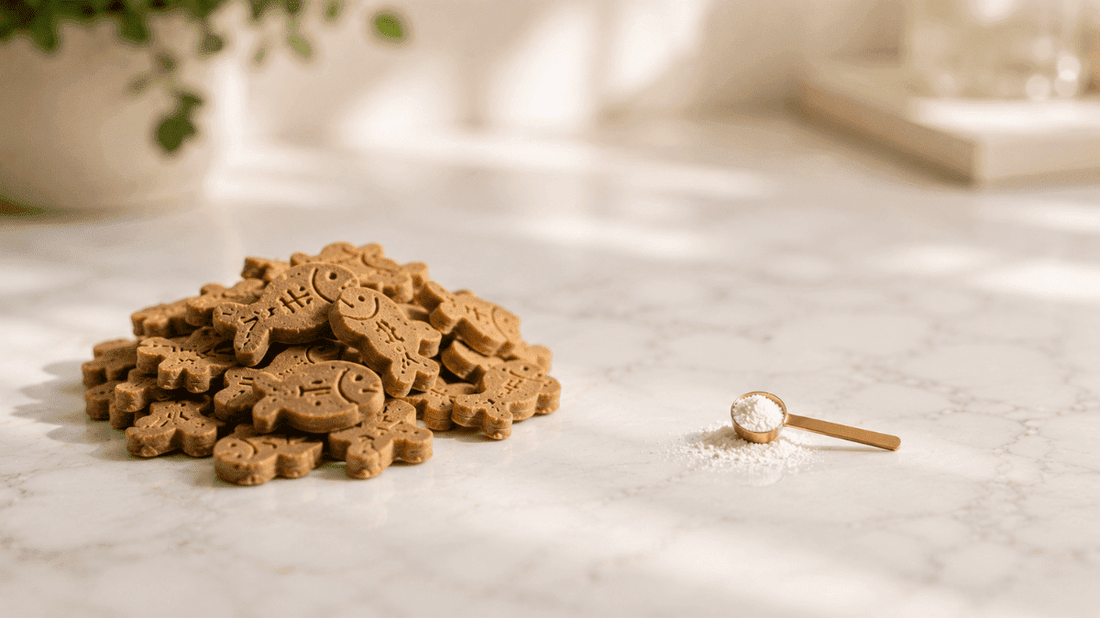
Cat dental treats and powders fit into a routine in different ways. A purpose-made treat may help when your cat chews it as intended; a powder can be added to food. Neither is a guaranteed way to prevent dental disease, and neither removes hardened tartar.
Australian vets find some level of dental disease in 80% of dogs and cats over the age of three, according to the Australian Veterinary Association. Persistent bad breath, red gums or changes in eating deserve a veterinary check even if your cat happily takes treats or a supplement.
Key takeaways
- Check the evidence and directions for a specific dental treat or powder, not just its category.
- Consider chewing habits, dietary needs and what your cat accepts without stress.
- Brushing with cat-safe toothpaste and veterinary care remain important.
- Purrlys® is a supportive dental probiotic powder mixed into wet food twice daily.
How treats and powders differ
Some purpose-made dental treats are designed to provide mechanical contact as a cat chews. How much they help depends on the particular product and whether your cat chews it rather than swallowing it whole. Compare serving directions and ask your vet about options suited to your cat. Ordinary crunchy food should not be assumed to clean teeth.
Dental powders have different formulas and instructions. A probiotic powder aims to support a healthy oral microbiome, but a powder does not mechanically brush teeth and cannot remove tartar or treat a sore gum. Avoid assuming one format is automatically more effective than another.
Choosing for your cat
Think about whether your cat enjoys chewing, eats wet food reliably, has food sensitivities or needs to limit treats. Read ingredient labels and consider the extra calories from treats within your cat’s overall diet. A cat with a therapeutic veterinary diet, medical condition or dental pain needs individual veterinary guidance before adding products or changing food.
If your cat refuses a product, do not let dental care become a reason to skip meals. Introduce one change at a time and watch appetite and comfort. Brushing with cat-safe toothpaste can help remove soft plaque when your cat tolerates it; do not brush a painful mouth.
The oral–gut connection
The mouth and gut both contain microbes, and oral microbes are swallowed. Their relationship is complex. A dental probiotic can support oral and gut microbiomes, but this does not mean a gut imbalance caused bad breath or that a supplement treats digestive illness, gum disease or systemic conditions.
Using Purrlys®
Purrlys® Dental Probiotic is a tasteless, odourless powder that supports oral and gut microbiomes and helps protect teeth and gums from plaque and harmful bacteria. It complements, rather than replaces, brushing and veterinary dental care.
Sprinkle into your cat’s wet food and mix well, twice daily. Introduce gradually over up to two weeks, depending on your cat’s age, health and any sensitivities. Check the age-specific directions on the How Purrlys® Works page; do not assume one scoop suits every cat. Consult your vet before use if your cat has chronic kidney disease, thyroid disease or eats a therapeutic veterinary diet.
Once your cat is on the full dose (for adult cats, one 0.5 g scoop in the morning and one in the evening), most cat parents notice fresher breath within about two weeks, so allow two to four weeks from starting. Giving it twice a day, every day, keeps the protective biofilm strong. Once a day takes longer to show results, and some cats may not see results at all. Plaque and gum improvements may take 4 to 12 weeks from reaching the full dose; results vary. Explore Purrlys® and decide with your vet how it fits your cat’s routine.
When vet care matters
Ask your vet about persistent bad breath, red or bleeding gums, drooling, dropped food, a changed chewing pattern or apparent mouth pain. Cats sometimes keep eating despite dental problems. Home products do not guarantee that your cat will avoid a professional cleaning or other treatment.
Frequently asked questions
Is powder better than dental treats?
There is no universal winner. Compare specific products and ask your vet which, if either, is appropriate for your cat. Neither replaces a dental check.
Can I give both?
Ask your vet if the combination fits your cat’s diet and health, especially if they have a medical condition or are on a therapeutic diet.
Will a powder remove tartar?
No. Hardened tartar and painful teeth need veterinary assessment and potentially a professional procedure.
Is a powder automatically gentler on a sensitive stomach?
No. Introduce new products gradually, monitor your cat and ask your vet about ongoing digestive symptoms.
When might Purrlys® make a difference?
Once your cat is on the full dose (for adult cats, one 0.5 g scoop in the morning and one in the evening), most cat parents notice fresher breath within about two weeks, so allow two to four weeks from starting. Plaque and gum improvements may take 4 to 12 weeks from reaching the full dose, and results vary.
Can kittens use Purrlys®?
Yes, once your kitten has their adult teeth, which is generally at around six months. From then until 12 months, give the kitten dose: one 0.5 g scoop a day, split between two meals (half a scoop in the morning and half at night). From 12 months, move to the adult dose of one 0.5 g scoop in the morning and one in the evening. Follow the age-specific directions on the How Purrlys® Works page. If your kitten has any pre-existing health conditions, please speak with your vet before starting Purrlys.