
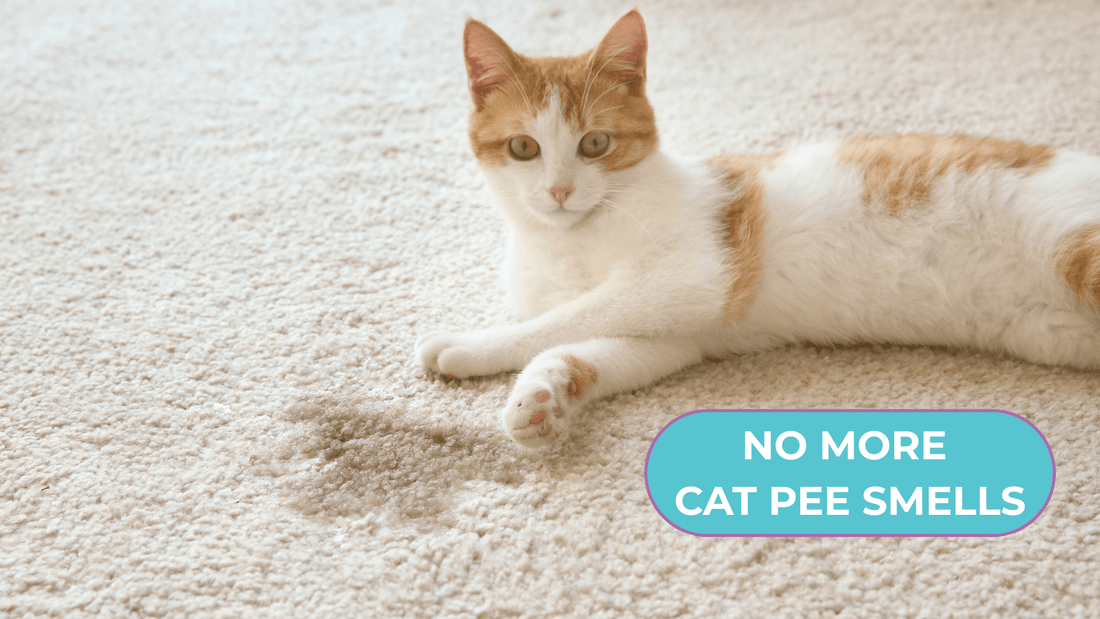
Little accidents do happen from time to time. If you're trying to figure out how to remove cat urine smell from carpet, you first need to understand what you're up against. The real problem is uric acid, a component in cat urine that doesn’t just dissolve in water. It can hang around for years unless you tackle it with the right kind of enzymatic solution.
Why That Cat Pee Smell Is So Hard to Get Rid Of
We’ve all been there—that sharp, unmistakable ammonia smell that seems to appear out of nowhere. It's a common frustration for cat owners, but there's a good scientific reason it’s so stubborn. Unlike a simple spill, cat urine actually gets more pungent as time goes on. Bacteria get to work breaking it down, releasing smelly compounds called thiols, which, funnily enough, are the same things that give skunk spray its infamous power.
This is exactly why your standard carpet cleaner usually doesn't cut it. It might get rid of the visible stain and cover up the odour for a day or two, but it leaves the real source of the problem untouched.
The true culprit is the uric acid crystals. These microscopic crystals don't dissolve in water, and they can embed themselves deep in your carpet fibres, the underlay, and even the subfloor below. For years, they can lie dormant, only to be reactivated by a bit of humidity, releasing that awful smell all over again.
The Science Behind the Stink
To truly get rid of the odour for good, you have to completely break down and destroy these uric acid crystals. Unfortunately, many of the go-to DIY methods just aren't up to the task.
A 2023 survey of Australian pet owners really highlights this. It found that while 56% of people tried a home remedy first, a massive 72% of them said the smell came back within two weeks. Why? Because the underlying uric acid wasn't actually neutralised. You can learn more about the challenges of cleaning cat urine from simplegreen.com.
Inappropriate urination can sometimes be a sign of underlying stress or health issues. Just as a persistent urine smell is a sign of a deeper problem in your carpet, changes in your cat's habits can signal issues with their well-being. Keeping an eye on all aspects of their health is key.
Think of it this way: their overall health is a puzzle with many pieces. Dental health, for example, is a crucial part of their wellness that’s often overlooked. Giving them at-home support to complement their regular vet check-ups is a fantastic way to maintain their overall well-being. If you’re looking for other simple ways to support your cat, you might find our guide on what causes bad breath in cats helpful for proactive care.
Your Immediate Response to a Fresh Stain
Caught in the act? When you find a fresh accident, the clock is ticking. What you do in the first few minutes is crucial for stopping that sharp, ammonia-like odour from setting in for good. The primary goal is simple: get as much of the urine out of the carpet fibres as you can, before it has a chance to seep down into the underlay.
Your instinct might be to grab a brush and scrub furiously, but don't. That's one of the biggest mistakes you can make. Scrubbing just grinds the urine deeper into the carpet pile and can even damage the fibres, making the stain look worse.
Instead, think blotting, not scrubbing. Grab a thick wad of paper towels or a couple of old, clean towels you don't mind sacrificing. Lay them over the wet patch and press down firmly. Stand on it if you have to; you're trying to draw the liquid up and out. Keep replacing the towels with fresh, dry ones and repeat until you're barely picking up any moisture. This first step alone makes a world of difference.
Finding Every Last Spot
Of course, sometimes the smell is there, but the stain isn't obvious. This is especially true for older, dried-in accidents. Here’s a little trick of the trade: cat urine glows under ultraviolet (UV) light thanks to the phosphorus it contains.
A cheap UV blacklight torch, easily found online, is your best friend in this situation. Just wait until it's dark, turn off all the lights, and do a slow sweep of the room with the torch. Any old urine stains will light up with a yellowish-green glow, revealing exactly where you need to focus your cleaning efforts. No more guessing games.
Your game plan changes depending on whether you're dealing with a wet puddle or a phantom smell from a dried stain. Fresh stains need immediate blotting action, while older ones require a bit of detective work with a UV light before you can even think about treating them.
Trying Some At-Home Fixes First

When you stumble upon a fresh accident, your first instinct might be to panic. But before you reach for heavy-duty chemicals, take a breath. Your own kitchen pantry probably has everything you need for immediate damage control, especially if you've caught the spot early.
The two heroes of DIY pet stain removal are plain old white vinegar and baking soda. They're surprisingly effective, but the trick is using them correctly and acting fast, before the urine has a chance to seep deep into the carpet padding.
How to Use Vinegar for Immediate Odour Neutralising
The logic here is simple chemistry. The acetic acid in white vinegar gets to work neutralising the alkaline ammonia in fresh cat urine, which is the source of that initial sharp, stinging smell.
To get started, mix a solution of one part white vinegar to one part cool water in a spray bottle.
After blotting up as much of the urine as you possibly can with a dry towel, lightly spray the vinegar solution over the affected area. You want to dampen the carpet fibres, not completely soak the underlay. Let it sit for about 10 to 15 minutes—this gives the vinegar time to break down the ammonia. Then, come back with a fresh, dry cloth and blot thoroughly to lift the moisture out.
The Baking Soda Trick for Lingering Smells
Once the spot is almost dry to the touch, it’s time for the second step. Baking soda is a fantastic natural deodoriser and will help absorb any smells the vinegar didn't quite catch.
Don't be shy here—sprinkle a generous layer of baking soda right over the spot. Let it sit for a good few hours; overnight is even better if you can manage it. The longer it sits, the more odour it will absorb from the carpet. The final step is to thoroughly vacuum it all up. You should notice a huge improvement.
A Word of Warning: Whatever you do, never use a steam cleaner or apply heat to a cat urine stain. The heat will permanently fuse the urine proteins into the carpet fibres. This essentially "cooks" the stain and smell into your carpet, making it nearly impossible to ever get out. It's also wise to steer clear of any ammonia-based cleaners, as their smell can actually encourage your cat to mark the same spot again.
While these home remedies are brilliant for fresh accidents, they have their limits. For older, more stubborn smells that have had time to form uric acid crystals deep in the carpet, you'll likely need to bring in something more powerful.
Why You Need an Enzymatic Cleaner in Your Arsenal
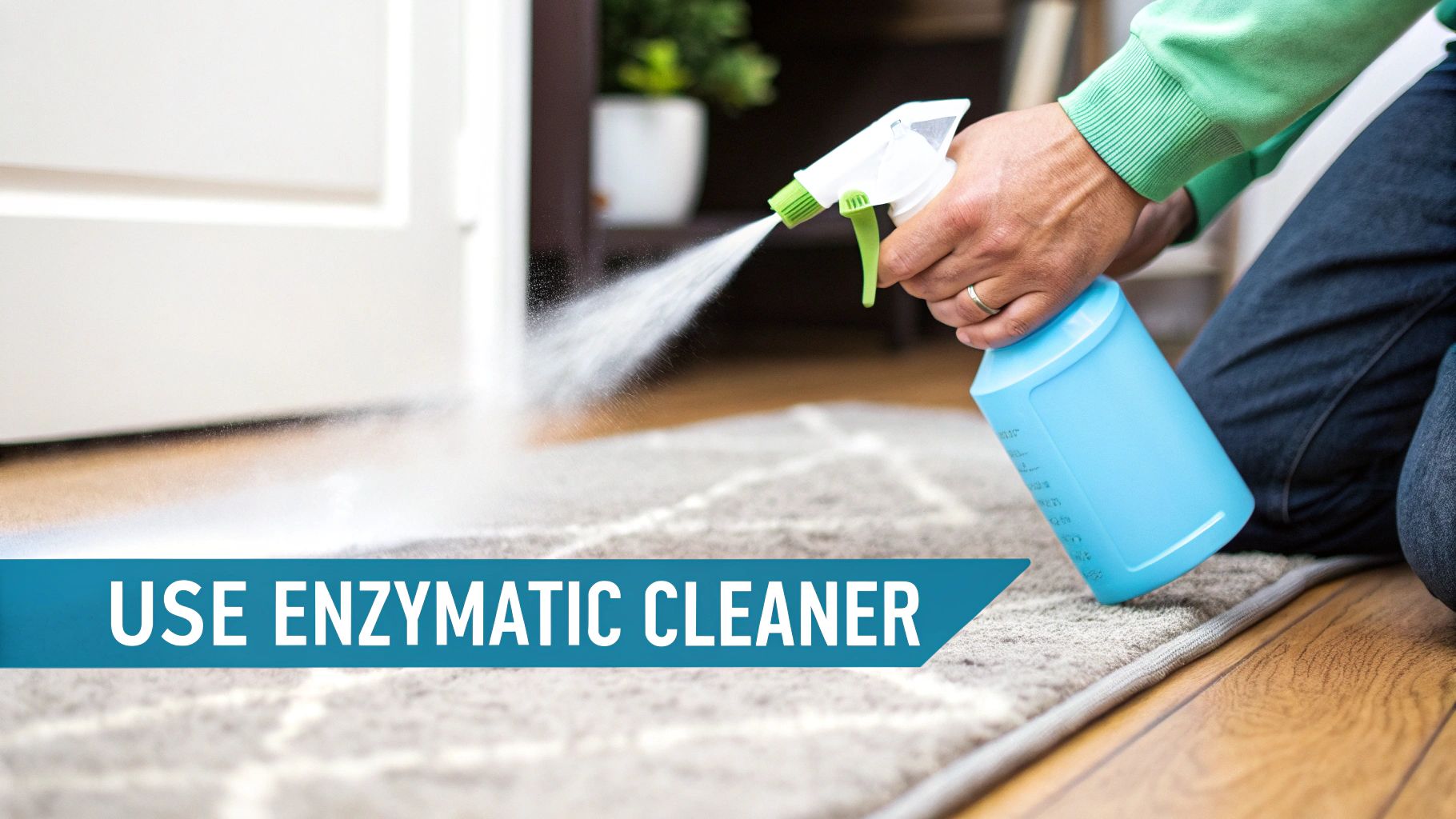
Sometimes, no matter how much bicarb soda and vinegar you throw at a stain, the smell just… lingers. This is especially true for older, set-in accidents. When you reach this point, it’s time to bring in the big guns: a proper enzymatic cleaner.
These aren't just another carpet shampoo that temporarily masks the odour with a strong fragrance. They're specifically designed with active enzymes—think of them as tiny, targeted odour-eating machines. Their one job is to find the organic proteins in the cat urine, particularly the stubborn uric acid crystals, and literally break them down until they're gone for good.
This is the key difference: enzymatic cleaners eliminate the source of the smell at a molecular level.
Finding the Right Product and Using It Correctly
Don't just grab any old cleaner off the shelf. You need to look for a formula specifically designed for cat urine. Check the label—it should proudly state it contains "enzymes" or has an "enzymatic formula." A good quality product is a worthwhile investment, because it’s the only thing that truly works.
It seems a lot of pet owners are catching on. A 2022 study found that 78% of pet owners in major Australian cities couldn't get rid of pet smells with standard cleaners. This led to enzymatic products becoming the go-to solution for 64% of them. You can get more details from these insights on specialised pet cleaners from Bioenzyme
Now, how you apply the cleaner is just as important as which one you choose. Here's what I've learned gets the best results:
- Don't Be Shy, Saturate! You need to completely soak the area. The cleaner has to penetrate as deep as the urine did, which often means getting right down into the carpet underlay.
- Widen the Perimeter. Urine spreads out under the surface. Always treat an area at least 15-20 centimetres wider than the visible stain on top.
- Patience is a Virtue. The enzymes need time to do their job. Cover the wet spot with a damp towel (this keeps the enzymes active for longer) and let it sit for 12 to 24 hours, or whatever the bottle recommends. Resist the urge to scrub or blot it up straight away!
Once you’ve let it sit, blot up the excess liquid with some clean, dry towels. Then, just let the area air-dry completely. This can take a day or two, so be patient. A final vacuum over the spot once it’s bone dry will help lift the carpet fibres back up.
Preventing Accidents Before They Happen
Let's be honest, the best way to deal with cat urine odour is to prevent the accidents from ever happening. It’s about shifting your mindset from clean-up mode to detective mode. When a cat urinates outside their litter box, they're often trying to tell you something is wrong.
First things first, rule out a medical problem. Conditions like urinary tract infections (UTIs) or kidney issues can make urination painful, and your cat might start associating that pain with their litter box. If the behaviour is sudden, your first port of call should always be the vet to get a clean bill of health.
Creating a Stress-Free Environment
If the vet gives your cat the all-clear, it's time to look at their environment and behaviour. Stress is a massive trigger for cats. Think about recent changes in your home – a new pet, a new baby, or even just moving the furniture around. These can make a cat feel insecure, and they might start marking their territory to feel more comfortable.
The litter box itself needs to be a five-star experience for your cat. Here are a few golden rules I've learned over the years:
- Location is everything. The box should be in a quiet, low-traffic spot where your cat feels safe and isn't likely to be ambushed by another pet or a noisy child.
- Keep it pristine. Scoop the box at least once a day and perform a full litter change monthly for clumping litters and weekly for non-clumping types, wash the tray weekly. Cats are incredibly clean creatures; they won't use a dirty toilet any more than you would.
- The right fit matters. The box needs to be big enough for your cat to comfortably turn around in. Some cats love the privacy of a covered box, while others feel trapped and prefer an open tray. You might need to experiment a little, and it's best practice to provide a tray for each cat you have.
It's a more common problem than you might think. Australian veterinary behaviourists estimate that about 10-15% of cats will have issues with inappropriate urination at some point in their lives. To get ahead of any potential problems, it can be helpful to explore effective pet incontinence solutions that are designed to manage accidents while you and your vet figure out the cause.
For more advice on keeping your feline friend happy and healthy, head over to our latest articles on cat health.
Got Questions About Cat Urine Removal? We've Got Answers
When you're dealing with cat pee on the carpet, a million questions probably run through your mind. Getting the right advice is crucial for getting rid of that smell for good, so let's tackle some of the most common concerns I hear from pet owners.
The biggest one is always, "Will this smell ever go away?" I get it, it can feel hopeless. But the answer is a resounding yes, it absolutely can. The trick isn't to cover it up, but to completely destroy the uric acid crystals causing the stench. That’s a job for a quality enzymatic cleaner, not just a standard carpet spray.
Your Top Concerns Addressed
People often ask about using homemade solutions like vinegar and baking soda. Are they safe? For most synthetic carpets, they're generally fine, but I can't stress this enough: always do a little spot test somewhere hidden first. Natural fibres like wool are a different story and can be damaged by acidic cleaners, so you need to be extra careful.
Another question that comes up a lot is about steam cleaning. It seems like a good idea, right? Blast it with heat and steam! Unfortunately, this is one of the worst things you can do. The intense heat from a steam cleaner will actually cook the urine proteins, permanently bonding them to the carpet fibres. It essentially sets the stain and the smell forever, making it nearly impossible to remove later.
If you've tried everything and that stubborn cat urine smell just won't budge, it might be time to call in the experts. A professional odor removal service has the equipment to tackle situations where urine has soaked deep into the carpet underlay or even the subfloor.
For more handy tips and answers to your pet care questions, head over to our detailed FAQ page. We've put together health information to help you feel more confident in every part of being a cat owner.
While you’re busy making your home smell fresh again, don't overlook your cat's dental health—it's a key part of their overall well-being. You can empower yourself to support their dental hygiene at home, in between vet check-ups and professional cleans. Purrlys® Premium Dental Probiotic for Cats offers a natural, complementary approach to achieve optimum health for your cat. What makes it different is that it’s completely tasteless and odourless, making it incredibly easy to sprinkle on their food without them even noticing. It’s a simple, fuss-free way to enhance their at-home dental care. You can try it completely risk-free with our 90-day money-back guarantee at @purrlys.com.au