
Australian vets find some level of dental disease in 80% of dogs and cats over the age of three, according to the Australian Veterinary Association. The foundation for that outcome, or against it, is laid in kittenhood. A kitten's oral microbiome is still developing, which means early intervention has an outsized impact. The bacterial balance established in those first months shapes the oral environment your cat will carry into adulthood.
This guide covers what to expect during the teething transition, why the gut-mouth connection matters from the start, and how to build a consistent preventative dental care for kittens routine that doesn't require a daily brushing battle.
Key Takeaways
- A kitten's developing microbiome is highly receptive to early intervention, establishing good bacterial balance now reduces disease risk later.
- The teething window (2–6 months) is also a critical socialisation period for introducing mouth handling and wellness routines.
- The oral and gut microbiomes are part of a single, connected system, supporting one benefits the other.
- Consistent daily care is more effective than intensive but infrequent intervention. Format matters: choose something sustainable.
- Purrlys® is a tasteless, odourless probiotic powder formulated by Australian microbiome scientists to support the oral-gut axis from kittenhood.
Why Early Dental Care Sets the Foundation
Kittens are born with a largely undeveloped oral microbiome, a blank microbial slate that is highly responsive to early influence. The bacterial communities that colonise the mouth in the first weeks and months of life establish patterns that persist into adulthood. This makes kittenhood the most effective window for preventative dental care for kittens: intervening early, before pathogenic bacteria become entrenched, is significantly more effective than correcting established disease later.
Bad breath in a kitten is not a normal baseline, it is an early indicator that the microbial balance is shifting in the wrong direction. Addressing this proactively protects not just the mouth, but the broader systemic health of the cat. Oral bacteria that are allowed to proliferate unchecked can enter the bloodstream and affect the heart, liver, and kidneys over time.
The Long-Term Case for Prevention
Prevention is also the most cost-effective approach. In Australia, a routine dental scale and polish typically costs between $400 and $700. If disease progresses to the point where extractions are required, costs can reach $1,200 to $1,800 or more. A consistent daily routine established in kittenhood reduces the likelihood of reaching that point. Learn more about overall cat health and the role oral care plays in long-term wellbeing.
What a Healthy Kitten Mouth Looks Like
Healthy gums are a consistent, light pink. A thin red line where the tooth meets the gum is an early sign of gingivitis. Behavioural indicators of oral discomfort include pawing at the mouth, dropping food while eating, or reluctance to chew. Building a habit of weekly mouth checks during calm handling sessions allows you to catch changes early, before they require clinical intervention.
The Kitten Teething Timeline
Understanding the teething process allows you to time your dental care routine effectively and identify what's normal versus what warrants veterinary attention. The first year involves two distinct dental phases, each with its own considerations for preventative dental care for kittens.
The teething window, roughly 2 to 6 months, also coincides with the critical socialisation period. Kittens introduced to mouth handling and wellness routines during this window are significantly more likely to accept them as adults. This makes early habituation a practical investment in long-term compliance. Research from the Cornell Feline Health Center highlights how early dental disease prevention shapes long-term feline oral outcomes.
Weeks 2–6: Deciduous Teeth
Kittens are born toothless. Deciduous (baby) teeth begin emerging around week two, with a full set of 26 present by approximately six weeks. As kittens transition from nursing to solid food, the oral bacterial environment begins to shift. This is the ideal time to begin gentle mouth handling, lifting the lips, touching the gums, during calm, relaxed moments. No products are required at this stage; the goal is habituation.
Months 3–6: The Adult Tooth Transition
Between three and six months, 30 permanent adult teeth begin replacing the deciduous set. Common signs of active teething include increased drooling, a tendency to chew on objects, mild gum redness, and occasional pawing at the face. These are normal. What to watch for:
- Retained deciduous teeth, if a baby tooth doesn't fall out as the adult tooth emerges, the resulting crowding can cause misalignment and increased plaque accumulation. Visible "double teeth" warrant a vet check.
- Persistent swelling or bleeding, beyond mild redness, these are not typical teething symptoms and should be assessed professionally.
Baby teeth don't need this kind of dental care, so the early months are best spent on gentle mouth handling. Once the adult teeth are through, generally at around six months, you can start Purrlys at the kitten dose to support the oral and gut microbiomes as the adult teeth settle in.
The Gut-Mouth Connection
The mouth is the entry point to the entire digestive system. Every time a kitten swallows, bacteria from the oral environment travel into the gut. If pathogenic bacteria dominate the mouth, they seed the gut with the same imbalance, affecting digestion, immune function, and systemic health. Effective preventative dental care for kittens addresses this continuous system, not just the surface of the teeth.
Beneficial bacteria introduced into the oral environment compete directly with plaque-forming species for space and nutrients. This competitive exclusion reduces biofilm formation, the precursor to tartar, and helps maintain a pH-balanced environment that protects developing enamel. A healthy gut microbiome also regulates the body's inflammatory response, which in turn supports gum tissue health. The two systems are in constant communication.
The Science of Oral Probiotics for Kittens
Feline-specific probiotic strains are selected for their ability to survive the acidic feline stomach and colonise the oral and gut environment effectively. They work by outcompeting pathogenic species, neutralising the volatile sulphur compounds responsible for bad breath, and supporting the pH balance that prevents tartar calcification on new adult teeth. General digestive probiotics or human-formulated supplements are not optimised for this purpose. Learn more about how Purrlys works and the science behind the oral-gut approach.
Why Gut Health Affects Breath
Persistent bad breath in kittens often originates deeper in the digestive tract, not just at the tooth surface. Dysbiosis in the gut, an imbalance of bacterial populations, contributes to the production of malodorous compounds that travel upward. Supporting gut health with targeted probiotics addresses this upstream source, complementing the direct oral benefits. The AVMA's guidance on pet dental care reinforces the importance of home-based routines that go beyond surface cleaning.
Building a Sustainable Home Care Routine
The most effective preventative dental care for kittens routine is the one that can be maintained consistently. An imperfect routine performed daily is more valuable than an ideal one performed occasionally. This means choosing formats that integrate naturally into your existing feeding and handling habits, rather than adding a separate, stressful procedure.
Mouth Handling and Habituation
Begin with the "lip lift" during calm cuddle sessions. Gently slide a finger along the gumline to lift the side of the mouth, then reward with a treat or positive attention. Repeat regularly until your kitten accepts this without resistance. This builds the tolerance needed for future vet examinations and makes weekly home checks straightforward. Important: never use human toothpaste. Ingredients such as xylitol and fluoride are toxic to cats. If brushing, use only feline-specific products, or focus on microbiome support as the primary daily intervention.
Probiotic Powders: The Practical Daily Option
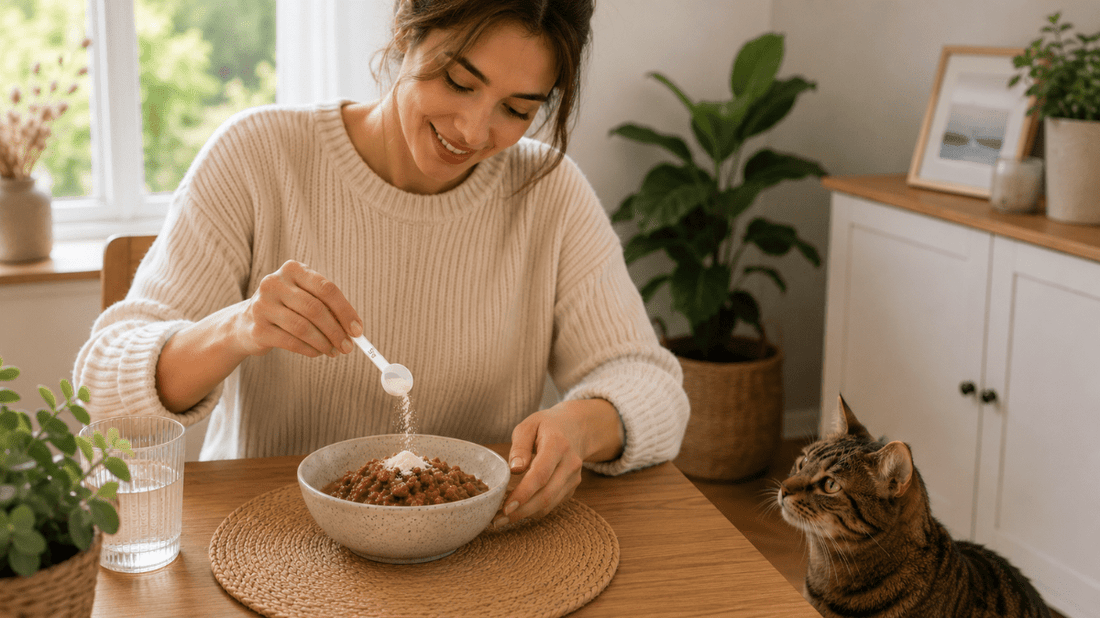
For most kitten parents, a tasteless probiotic powder is the most sustainable daily format. It requires no handling beyond the normal feeding routine, introduces no new stressors, and works on both the oral and gut microbiome simultaneously. Once your kitten has their adult teeth, at around six months, simply sprinkle it into their wet food and mix well, morning and evening; most kittens won't notice any change. This approach is particularly well-suited to kittens that resist handling or are sensitive to changes in their environment.
Shop Purrlys® Dental Probiotics to start building a healthier oral foundation for your kitten today.
Purrlys®: Formulated for Feline Oral Wellness
Purrlys® was developed by Australian microbiome scientists to address the oral-gut connection in cats, the understanding that lasting dental health requires supporting both systems, not just the surface of the teeth. The vet-approved formula is made in Australia in a human-grade facility, in a completely tasteless and odourless powder that integrates into any feeding routine without disruption.
For kittens, this means microbiome support can begin once their adult teeth come through, generally at around six months. There is no brushing required, no change to the meal your kitten already accepts, and no stress introduced into the feeding routine.
Why Australian Cat Parents Choose Purrlys®
Purrlys® is made in a human-grade facility, a meaningful distinction in a market where "natural" is often used loosely. A subscription option ensures continuity of supply without manual reordering, supporting the consistency that microbiome health requires. For more on the local science behind the formula, explore our guide on cat dental probiotics in Australia.
When to Start
Purrlys® can be introduced once your kitten has their adult teeth, which is generally at around six months. From then until 12 months, give the kitten dose: one 0.5 g scoop a day, split between two meals (half a scoop in the morning and half at night). From 12 months, move to the adult dose of one 0.5 g scoop in the morning and one in the evening. Build up gradually over up to two weeks, following the kitten introduction schedule. If your kitten has any pre-existing health conditions, please speak with your vet before starting Purrlys. Start your kitten's oral health routine with Purrlys® today.
The Smartest Investment in Your Kitten's Long-Term Health
The first year of a kitten's life is the most influential window for establishing oral health. By understanding the teething timeline, supporting the gut-mouth connection, and choosing a consistent daily format for preventative dental care for kittens, you reduce the likelihood of the dental disease that affects the majority of adult cats.
Purrlys® was formulated specifically for this purpose: a tasteless, human-grade probiotic powder that supports both the oral and gut microbiome with a simple addition to your kitten's wet food, morning and evening. Developed by Australian scientists. Vet-approved. Designed for real cats and real routines.
Give your kitten the foundation of lifelong oral health with Purrlys® Dental Probiotics.
Frequently Asked Questions
Is it too early to start dental care for my 12-week-old kitten?
It's a great time to start mouth handling, but not Purrlys yet. At 12 weeks your kitten still has baby teeth, which don't need dental care. Your kitten is in the socialisation window, so use these months for gentle lip lifts and handling so they get used to it. Once their adult teeth come through, generally at around six months, you can start Purrlys at the kitten dose.
Can I use a regular toothbrush on my kitten's teeth?
Human toothbrushes are too large and too stiff for a kitten's mouth. If brushing, use a feline-specific finger brush or a very soft, small-headed pet brush. Never use human toothpaste, ingredients such as xylitol and fluoride are toxic to cats. Many cat parents find that a tasteless probiotic powder is a more practical and sustainable daily alternative to brushing.
How do I know if my kitten is having trouble teething?
Normal teething signs include increased drooling, a tendency to chew on objects, mild gum redness, and occasional pawing at the face. These typically resolve as the adult teeth emerge. Persistent swelling, heavy bleeding, or visible "double teeth" (a retained baby tooth alongside an emerging adult tooth) warrant a veterinary assessment.
Are dental probiotics safe for young kittens?
Purrlys is suitable for kittens once their adult teeth come through, generally at around six months, on the kitten dose: one 0.5 g scoop a day, split between two meals, until 12 months, then one scoop morning and evening. Purrlys® is made in a human-grade facility and formulated to be gentle on a developing digestive system. Because the oral and gut microbiomes are connected, probiotic support benefits whole-body health as your kitten grows. If your kitten has any pre-existing health conditions, please speak with your vet before starting Purrlys.
What should I do if my kitten has bad breath?
Bad breath in a kitten is not normal and typically indicates microbial imbalance in the mouth or gut. Check for visible redness along the gumline or food caught between teeth. For kittens with their adult teeth, a daily probiotic can help support bacterial balance at the source. If bad breath persists despite supplementation, a veterinary check is recommended to rule out underlying dental or systemic causes.
Can diet alone prevent plaque and tartar in kittens?
Diet plays a role, but is not sufficient on its own. Dry food marketed as dental-supportive may reduce surface plaque on some teeth, but plaque accumulates in areas that food contact doesn't reach. A multi-layered approach, microbiome support, regular home checks, and periodic veterinary assessment, is more effective than relying on diet alone for preventative dental care for kittens.
How often should I check my kitten's mouth at home?
Aim for a brief check once a week during a calm handling session. Regular checks allow you to identify retained baby teeth, early gum redness, or other changes before they progress. Kittens habituated to mouth handling from an early age are significantly easier to examine, both at home and at the vet.
What is the difference between kitten baby teeth and adult teeth?
Kittens have 26 deciduous teeth, small, sharp, and translucent. By 6–7 months, these are replaced by 30 permanent adult teeth, which are larger, more opaque, and include molars at the back of the mouth that are absent in the deciduous set. The adult teeth are the ones your cat will carry for life, making the transition period a critical window for establishing protective oral care habits.