Did you know that according to the Australian Veterinary Association, a staggering 80% of cats over the age of three are currently living with some form of dental disease? It is a heartbreaking number because our feline friends are masters at masking discomfort, often leaving owners unaware of the subtle signs of dental problems in cats that might be hiding behind those sweet meows. We all want our fur-babies to feel their absolute best, but the reality of wrestling a reluctant kitty with a toothbrush often feels like a mission impossible. You might worry about mounting A$1,000 plus veterinary bills for professional cleanings or, more importantly, whether your best friend is suffering in silence.
We agree that keeping those tiny teeth sparkling shouldn't feel like a daily battle. In this guide, you will learn exactly how to spot the indicators of feline distress before they become a "cat-astrophe" for your wallet and your pet. We'll show you how to identify if a vet visit is urgent and introduce you to a whisker-friendly way to support your cat’s health from the inside out. Since the oral and gut microbiomes are intrinsically linked, we'll explore how a healthy belly leads to a fresh, pearly-white smile. We are diving into everything from identifying red gums to understanding how a balanced belly creates a pawsome, stress-free glow for your favourite Aussie explorer.
Key Takeaways
- Discover why up to 80% of Aussie cats over age three suffer from "silent" dental issues and how to protect your fur-baby's long-term health.
- Learn to spot the 7 most common signs of dental problems in cats, including subtle behavioral red flags like messy eating or avoiding dry food.
- Understand the vital link between the oral and gut microbiomes and how harmful bacteria in the mouth can impact your cat's entire digestive system.
- Master a stress-free, "pawsome" home dental exam technique that keeps your kitty calm while ensuring their pearly whites stay sparkling.
- Explore a simple, brush-free Australian solution to support total oral wellness and a balanced gut for a purr-fectly happy cat.
Understanding Feline Dental Health: Why Those Kitty Kisses Matter
Your fur-baby is a master of disguise. While they might seem perfectly happy chasing a laser pointer or napping in a sunbeam, many Aussie cats are quietly dealing with oral discomfort. Feline dental disease is a common but often silent condition across Australia. Recent data shows a staggering stat: up to 80% of cats over the age of 3 are currently living with some form of dental issue. Because our feline friends are evolutionary experts at masking pain, these problems often go unnoticed until they become severe.
Cats hide physical vulnerability as a natural survival instinct. In the wild, showing weakness makes a feline a target, so your pampered house cat has inherited the same stoic traits. Spotting the signs of dental problems in cats early is the best way to save your feline friend from discomfort and protect your wallet from clinical procedures that often cost upwards of A$1,200. Our goal is to help you identify these whispers of pain before they turn into a roar of a medical bill.
The "Silent" Nature of Cat Dental Pain
Many cat parents assume that if their kitty is still eating, their mouth must feel fine. This is a common misconception. A cat’s drive to eat is a powerful survival mechanism that often overrides even significant oral pain. They might tilt their head to one side while chewing or swallow kibble whole to avoid touching a sensitive tooth, but they will rarely stop eating entirely until the situation is dire. This stoicism makes it incredibly easy to miss the early stages of decay.
You should also pay close attention to their breath during those morning snuggles. Halitosis is more than just a smelly nuisance; it's a clinical sign that harmful bacteria are taking over your cat's mouth. If those kitty kisses start to smell particularly fishy or foul, it's a clear signal that the oral environment is out of balance.
Common Dental Conditions in Australian Cats
Australian vets frequently see three main culprits: gingivitis, periodontitis, and tooth resorption. Gingivitis starts with red, inflamed gums, which can progress to periodontitis where the bone and ligaments supporting the teeth begin to break down. Another painful condition often diagnosed is Feline Odontoclastic Resorptive Lesions (FORLs), where the tooth structure essentially dissolves from the inside out. These conditions are incredibly common but largely preventable with the right daily support.
The secret to a happy mouth often lies in the belly. Purrlys supports the delicate balance of both the oral and gut microbiome, acknowledging that these two systems are biologically linked. When the microbiome is healthy, it crowds out the "bad" bacteria that cause plaque and inflammation. Keeping this balance in check is a pawsome way to ensure your cat stays comfortable and vibrant. You can learn more about maintaining this balance in our How Purrlys Works guide, which details how we support your cat's health from the inside out.
The 7 Telltale Signs of Dental Problems in Cats
Our feline friends are experts at hiding discomfort. It's an evolutionary trait that keeps them safe in the wild, but for Aussie cat parents, it makes spotting signs of dental problems in cats a bit of a challenge. You need to be "whisker-aware" during your daily cuddle sessions. By paying close attention to their mouth and habits, you can catch issues before they require a trip to the vet for a costly dental cleaning under anaesthesia, which often starts at upwards of A$600 in many Australian clinics.
Physical Signs You Can See and Smell
Halitosis is the most common giveaway. While a faint scent of their last salmon meal is normal, a truly pungent odour usually indicates a bacterial party in their mouth. This isn't just a surface issue; a foul smell often signals common dental diseases in cats like gingivitis or periodontitis. These conditions affect roughly 70% of cats by the time they reach three years of age.
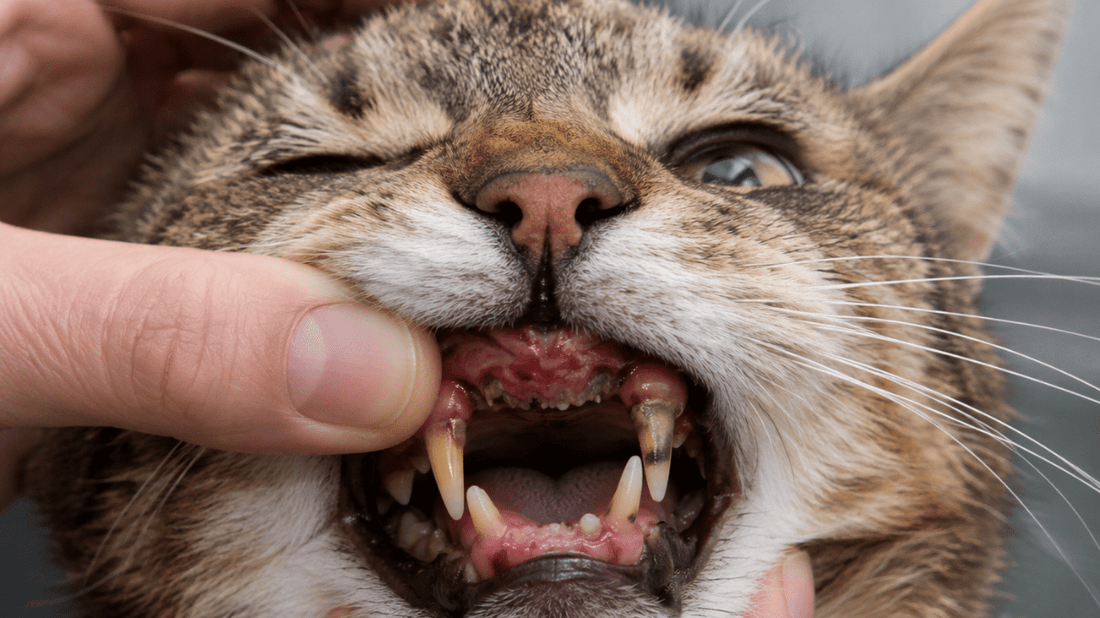
Gently lift your fur-baby's lip to check the gum line. Healthy gums are a soft, consistent pink. If you see a bright red line where the tooth meets the gum, or if the gums bleed when touched, your cat is likely experiencing inflammation. You should also look for visible tartar. This hardened plaque appears as yellow or brown buildup, usually starting on the upper molars. If you spot these "stony" deposits, the bacteria are already well-established.
Behavioural Changes: When Their Personality Shifts
Sometimes the clues are in how your cat acts rather than how they look. If your usually tidy eater is suddenly leaving a mess around the bowl, they might be struggling to chew. Watch for "quidding," which is when a cat drops half-chewed food from their mouth. You might also notice them chattering their jaw or tilting their head at an odd angle to avoid using a painful tooth. Some cats will suddenly refuse dry kibble, choosing only wet food because it's easier on their sensitive gums.
A scruffy, unkempt coat is another subtle indicator of oral distress. Cats use their mouths as their primary grooming tool. If it hurts to lick, they'll stop cleaning themselves, leading to mats and a dull appearance. It's vital to remember that your cat's health starts in the mouth but doesn't end there. The oral microbiome and the gut microbiome are deeply linked; bad bacteria in the mouth can travel down and disrupt their entire digestive system. To keep both systems in balance, many owners explore dental probiotics that support a healthy internal environment. Keeping your kitty's mouth fresh ensures their tummy stays happy too, giving you more of those sweet, scent-free purrs.
The Gut-Mouth Connection: Why Oral Health Starts Deep Inside
Your cat’s mouth is much more than just a tool for crunching kibble or delivering affectionate head-butts. It’s actually the front door to their entire internal world. At Purrlys, we look at feline health through a holistic lens because the oral and gut microbiomes are inseparable partners. Recognizing the early signs of dental problems in cats is vital because these two systems are constantly communicating. When your cat’s mouth is teeming with "bad" bacteria, it doesn't just stay on the teeth. It creates a ripple effect that touches every part of their fuzzy little body.
A balanced microbiome is the secret sauce for a thriving, energetic cat. These tiny, beneficial organisms work around the clock to support feline immunity and keep digestion smooth. Think of it as a microscopic security team. When the mouth is healthy, the gut remains happy, creating a cycle of wellness that keeps your fur-baby feeling their absolute best. Without this balance, your cat's natural defenses can start to wobble, leaving them feeling less than pawsome. It is a delicate dance that requires more than just a surface-level clean.
How the Oral Microbiome Impacts the Whole Body
Bacteria are natural hitchhikers. When plaque builds up along the gum line, it can cause tiny amounts of inflammation that allow bacteria to migrate directly into the bloodstream. Once they’ve caught a ride, these microscopic invaders can travel to major organs. Research shared by Petbarn and other veterinary experts suggests that chronic oral issues can eventually put a strain on the heart, liver, and kidneys. If you notice the clinical signs of dental disease, it’s often a whisper from the body that things are out of balance deep inside. A healthy mouth truly is the gateway to a happy gut; it ensures that your cat's internal systems aren't constantly fighting off unwanted intruders from the gum line.
Why Traditional Brushing Often Fails the Microbiome
We’ve all been there; trying to brush an Aussie cat’s teeth can feel like wrestling a tiny, disgruntled crocodile. While mechanical cleaning has its place, it often fails to address the underlying biological ecosystem. Brushing only tackles what’s on the surface, but it doesn't necessarily change the "neighborhood" of bacteria living in the mouth. This is where probiotics step in as the missing link in traditional care. Instead of just scrubbing, probiotics work to crowd out the harmful bacteria that cause nasty plaque and that whisker-twitching bad breath we all know too well.
By introducing beneficial strains, you’re helping your cat’s body maintain its own natural balance. This biological approach is much more effective than fighting against your cat's instincts with a plastic brush every night. You can explore the science behind how Purrlys works to see how we’ve designed a solution that’s as gentle as a purr but incredibly effective at targeting the signs of dental problems in cats from the inside out. It’s about working with your cat’s biology, not against it, to ensure they stay chic, healthy, and happy.
How to Check Your Cat’s Teeth at Home (Without the Scratches)
Checking your fur-baby's mouth doesn't have to feel like a wrestling match. Think of it as a cozy bonding session that keeps them healthy from their whiskers to their tail. It's vital to remember that the oral and gut microbiome are linked; a disruption in one often leads to trouble in the other. Purrlys works on both systems simultaneously to keep your kitty's internal ecosystem in balance. By performing a quick check once a week, you can spot the early signs of dental problems in cats before they become painful or pricey.
Keep the environment calm. Choose a time when your cat is already lounging or sleepy. Have some high-value treats ready to ensure they associate this check-up with something pawsome. This isn't a replacement for a professional vet exam, but it’s a brilliant way to monitor your cat's daily comfort.
The Gentle Lip-Flip Technique
Start slow and follow these three simple steps to peek at those pearly whites:
- Step 1: Get your cat comfortable with head and chin rubs first. Gently stroke their cheeks to relax the jaw muscles and build trust.
- Step 2: Once they’re purring, slowly lift the side of the upper lip. You only need a small window to view the large canines and the premolars further back.
- Step 3: Look for redness at the very edge of the gum line. Healthy gums should be a soft, bubblegum pink. Any bright red "fire engine" lines are a signal that something is amiss.
When to Call the Vet
Sometimes, a home check reveals "red light" symptoms that require immediate clinical attention. If you notice loose teeth, bleeding gums, or if your cat is suddenly refusing all food, call your vet straight away. These are clear signs of dental problems in cats that indicate significant pain. Cats are masters at hiding discomfort, so a total refusal to eat is a feline emergency.
When you book that appointment, ask your vet about their specific cleaning protocols and what preventive steps you can take at home. It is also wise to consider the cost of dental cleaning in Australia as part of your pet care budget. In Aussie clinics, a professional scale and polish under general anaesthesia typically ranges from A$600 to A$1,200, depending on whether extractions are needed. Planning for these costs ensures your cat gets the best care without any financial surprises.
Want to support your cat's oral and gut health every day? Shop our Purrlys® Dental Probiotic to keep their microbiome in purr-fect balance.
Purr-fect Prevention: A Natural Approach to Feline Oral Wellness
Spotted the signs of dental problems in cats? Don't let those smelly breath moments or red gums dampen your fur-baby's spirit. While traditional brushing often feels like a wrestling match you're destined to lose, keeping your cat's mouth healthy doesn't have to be a chore. Purrlys offers a science-backed, Australian-made solution that treats oral care as a holistic journey. Our dental probiotic powder is a game-changer for Aussie households, focusing on the sophisticated balance of the feline body.
Most pet parents don't realize that a cat's mouth and their tummy are best friends. The oral microbiome and the gut microbiome are intrinsically linked; what happens in one directly impacts the other. Purrlys works by introducing beneficial bacteria that balance both systems, crowding out the "bad" bacteria that cause plaque and stinky breath. It's a natural, "brush-free" approach that supports their health from the inside out, ensuring your kitty stays as vibrant as a kitten at play.
We believe in "daily smiles" and zero stress. Our formula is crafted with human-grade ingredients and is completely tasteless. This makes it the ultimate secret weapon for picky eaters who can sniff out a supplement from a mile away. You get the peace of mind knowing you're providing premium care, and they get to enjoy their dinner without any suspicious textures or scents.
Why Aussie Cat Parents Love Purrlys
Living the busy Aussie lifestyle means we value products that actually work without adding a 20-minute struggle to our morning routine. Purrlys is incredibly easy to use. You simply sprinkle a tiny scoop onto your cat’s favourite wet or dry meal. There's no foaming, no chasing them under the sofa, and definitely no scratched arms.
- Expertly Formulated: Developed by Australian microbiome scientists right here at home.
- Quality Guaranteed: Every batch carries our "whisker-approved" seal, signaling professional reliability and safety.
- Tasteless Magic: Even the most finicky feline won't notice the boost in their bowl.
Starting Your Cat’s Journey to Better Breath
Ready to wave goodbye to the signs of dental problems in cats? Transitioning your kitty to a probiotic supplement is easy. Start with a half-dose for the first three days to let their digestive system get used to the new "good" bacteria. Once they're settled, a full daily scoop becomes their shield against plaque buildup. Consistency is the secret to a sparkling smile, which is why many of our community members choose a subscription. It ensures you never run out of your feline’s daily wellness boost while keeping the care routine effortless.
Give your cat the gift of fresh breath and a happy tummy today. Shop the Purrlys Dental Probiotic range and join the community of pampered, healthy Aussie cats.
Keep Your Kitty’s Kisses Fresh and Healthy
Watching for the signs of dental problems in cats is one of the kindest things an Aussie cat parent can do. According to data from the Australian Veterinary Association, 80% of cats over the age of three show symptoms of dental disease. Because your fur-baby’s mouth is the primary gateway to their digestive tract, keeping the oral microbiome balanced is essential for their gut health. These two systems are intricately linked; a healthy mouth helps maintain a flourishing belly.
You can ditch the stressful scrubbing and still provide elite care. Purrlys was developed by Australian microbiome scientists to target bad bacteria without the drama. This tasteless, brush-free powder features vet-approved, human-grade ingredients that mix seamlessly into any meal. It’s a simple, whisker-friendly way to ensure those daily snuggles stay sweet and your feline friend stays thriving from the inside out.
Give your fur-baby the gift of a healthy smile with Purrlys Dental Probiotics
Your tiny tiger relies on you to be their health hero. By choosing a natural approach that respects their biology, you’re paving the way for a lifetime of cozy purrs and vibrant health.
Frequently Asked Questions
Is bad breath in cats normal?
Stinky breath isn't just a quirky feline trait; it's often one of the first signs of dental problems in cats. While a faint scent of their last tuna snack is fine, a pungent "cat breath" usually means bacteria are throwing a party in your fur-baby's mouth. Since 80% of cats over the age of three develop some form of dental disease according to the AVMA, a smelly yawn is a signal to check those pearly whites.
Can I use human toothpaste for my cat?
You should never use human toothpaste for your feline friend because it contains ingredients like fluoride and xylitol that are toxic to cats. These substances can cause serious tummy upset or even liver failure if swallowed. Instead, choose a kitty-safe alternative or a supplement like Purrlys. Our formula works on both the oral and gut microbiome, recognizing that these two systems are linked for total health.
How can I tell if my cat is in dental pain if they are still eating?
Cats are masters of disguise and will often keep eating even when their mouth is throbbing. Look for subtle changes like dropping kibble, chewing on one side, or pawing at the face. The American Veterinary Dental College notes that feline patients often hide pain until it's severe. Keeping their oral and gut microbiome balanced with Purrlys helps maintain a happy, pain-free smile every single day.
What are the first signs of gingivitis in cats?
The most common early sign is a thin red line where the teeth meet the gums. You might also notice slight swelling or bleeding when they chew on their favorite toys. Gingivitis affects approximately 70% of cats by the time they reach their third birthday. If you spot these signs of dental problems in cats, it's time to book a visit with your local Aussie vet for a professional look.
Do dental treats actually work for removing plaque?
Some dental treats help reduce plaque through mechanical scraping, but they aren't a magic fix for every whisker-clad friend. For a more holistic approach, Purrlys targets the source by supporting a healthy balance in the mouth and the gut. Because these two environments are closely connected, managing the microbiome across both systems provides a much more comprehensive level of care than a crunchy treat alone could ever offer.
How often should a cat have a dental check-up in Australia?
Your cat needs a professional dental assessment at least once every 12 months during their annual vaccination visit. Australian veterinary guidelines suggest that senior cats or those with existing issues might need a check-up every 6 months to stay ahead of decay. Regular visits ensure your vet can catch tiny problems before they turn into expensive, painful tooth extractions for your precious companion.
Are some cat breeds more prone to dental problems?
Yes, certain breeds like Persians, Chinchillas, and Abyssinians have a higher genetic predisposition to oral health issues. Flat-faced or brachycephalic breeds often suffer from tooth overcrowding, which traps food and bacteria more easily. Research indicates these breeds can face a 20% higher risk of early-onset periodontal disease compared to other cats. Extra pampering and daily oral care are essential for these purr-ticular fur-babies.