
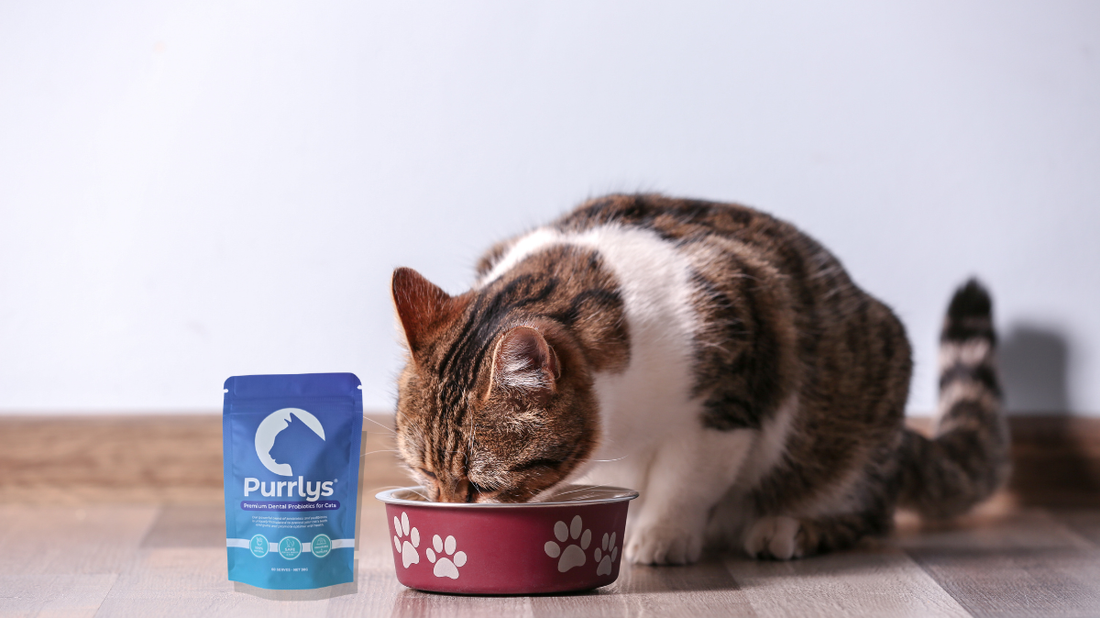
Some cats never warm to a toothbrush, even with patient training. That does not mean their dental health has to be ignored. You can work with your vet to find home-care options that suit your cat, while keeping an eye out for signs that professional treatment is needed.
Brush-free products can support a routine, but none should be sold as a way to cure dental disease or remove hardened tartar. Here is a straightforward look at the options for Australian cat parents.
Contents
- Start with a veterinary check
- Brush-free options
- Where Purrlys fits
- Build a routine your cat accepts
- Frequently asked questions
Start with a veterinary check
Up to 85% of cats over the age of three may experience dental disease. Cats also hide discomfort well. Persistent bad breath, red or bleeding gums, visible tartar, drooling, pawing at the mouth or changes in eating are reasons to book a dental examination. If your cat stops eating or seems to be in pain, seek prompt advice.
Your vet can check for problems below the gumline, advise whether cleaning or other treatment is needed, and help you choose safe home care. Starting supplements while painful disease goes untreated is not a substitute.
Brush-free options
Purpose-made dental diets and treats
Some products are designed so chewing helps clean tooth surfaces. Choose a feline-specific option with clear feeding directions. Check the calories and ask your vet whether it suits any existing medical or therapeutic diet. Ordinary kibble should not be assumed to work like a tested dental diet.
Gels and sprays
These may appeal to cats that accept handling near the mouth, but some dislike the taste or application. Follow the cat-specific label and stop if your cat becomes distressed. Do not use a dog or human dental product without veterinary advice.
Water additives
Some are easy to use, but a change in taste or smell may put a cat off drinking. Monitor their water intake carefully and stop using a product that discourages drinking.
Feline dental supplements
A powder may fit more easily into a cat’s usual meal. Check its ingredients, directions and claims. It should support daily care rather than promise to treat gingivitis, prevent all disease or replace veterinary cleanings.
Where Purrlys fits
Purrlys is an odourless, tasteless dental probiotic powder made in Australia in a human-grade facility. It supports the oral and gut microbiomes and helps protect teeth and gums from plaque and harmful bacteria as part of a daily routine. It does not diagnose, treat or cure dental disease.
Sprinkle into your cat’s wet food and mix well, twice daily. Do not add it to dry food or water. Introduce it gradually over six to eight days, depending on stomach sensitivity. Follow the age-specific directions on the How Purrlys Works page, rather than guessing an amount.
You should notice an improvement in their breath after two weeks. Plaque and gum support may take four to six weeks to become noticeable; individual results vary. Persistent bad breath or painful gums deserve a vet check. If your cat has chronic kidney disease, thyroid disease or a therapeutic diet, ask your vet before use.
Build a routine your cat accepts
- Have your vet assess any signs of dental pain first.
- Choose one feline-safe option that fits your cat’s diet and temperament.
- Introduce changes gradually and follow the product’s directions.
- Watch eating, drinking and behaviour; do not force a product that causes distress.
- Continue regular veterinary dental checks.
If brushing may be possible later, ask your vet how to introduce it gently. Brush-free does not have to mean brushing is permanently off the table.
Frequently asked questions
Can brush-free products remove tartar?
No home supplement should be expected to remove hardened tartar. Your vet can assess whether professional dental treatment is needed.
Are dental treats enough on their own?
They may be one part of home care, depending on the product and your cat. They do not replace dental examinations or treatment for existing disease.
Can I give Purrlys with dry food?
No. Sprinkle Purrlys into wet food and mix well, twice daily, following the age-specific instructions.
What if my cat has bad breath despite a supplement?
Arrange a veterinary examination. Bad breath may signal dental disease or another health issue and should not simply be masked.
There is no single brush-free solution for every cat. The safest approach combines realistic home care with your vet’s guidance and attention to any changes in comfort or appetite.