
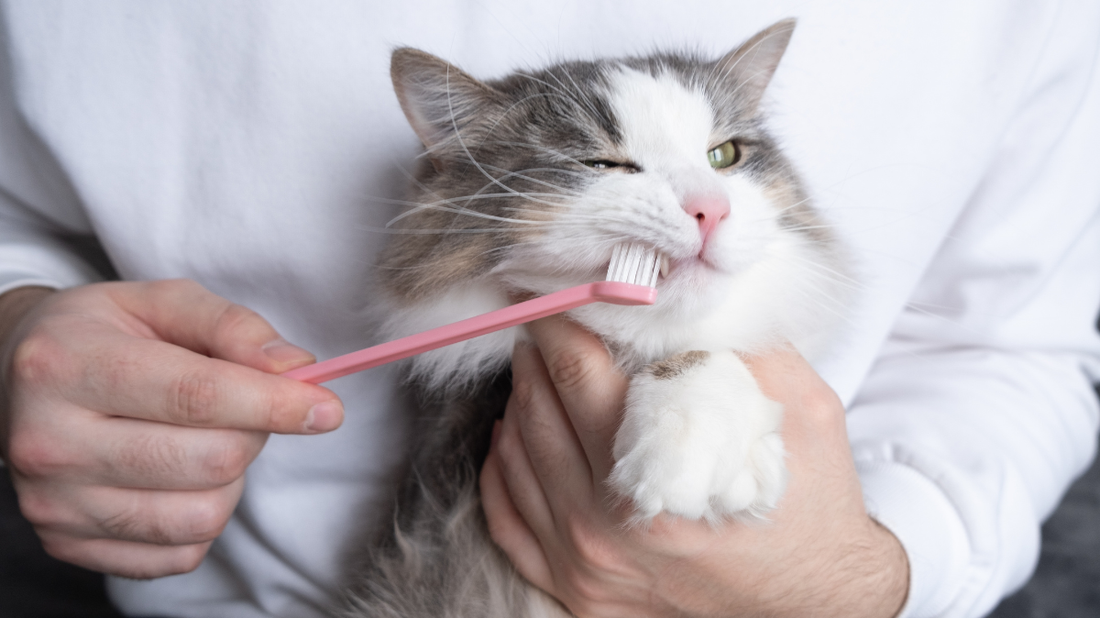
Not every cat will accept a toothbrush. If yours backs away at the sight of one, you are not alone. The sensible next step is not to give up on dental care, but to find an approach your cat tolerates and your vet recommends.
This guide compares common alternatives to brushing. None is a guaranteed substitute for veterinary dental care, and a sore mouth needs assessment before you try to solve the problem at home.
Contents
- Check for dental problems first
- Alternatives to brushing
- Where Purrlys fits
- A low-stress routine
- Frequently asked questions
Check for dental problems first
Up to 85% of cats over the age of three may experience dental disease. Persistent bad breath, red gums, visible tartar, drooling, pawing at the mouth or difficulty eating are all reasons to see a vet. A cat may keep eating despite pain, so do not wait for them to stop.
A veterinary examination can identify existing problems and help you choose appropriate home care. Hardened tartar and disease below the gumline cannot be removed by a treat, powder or water additive.
Alternatives to brushing
Dental diets and treats
Some purpose-made dental products have a texture designed to help clean teeth as a cat chews. Ordinary kibble is not the same as a dental diet. Check the feeding directions and calories, and ask your vet if a dental product suits your cat’s health and current diet.
Gels and sprays
Feline-specific gels or sprays may suit a cat comfortable with gentle handling near the mouth. Follow the label and do not force an application if the cat shows distress or pain. Never use human toothpaste or assume a dog dental product is safe for cats.
Water additives
These are convenient for some households, but cats may avoid water that tastes or smells different. Watch their drinking carefully; do not continue an additive that reduces water intake.
Dental probiotic powders
A cat-specific powder can fit into a normal feeding routine. Look for clear directions and realistic claims. A probiotic may support oral hygiene and microbiome balance but should not be presented as a cure for gingivitis or as a way to remove tartar.
Where Purrlys fits
Purrlys is an odourless, tasteless probiotic powder made in Australia in a human-grade facility. It supports the oral and gut microbiomes and helps protect teeth and gums from plaque and harmful bacteria. It is supportive daily care, not a treatment or cure for dental disease.
Sprinkle into your cat’s wet food and mix well, twice daily. Do not add it to dry food or water. Introduce it gradually over six to eight days depending on stomach sensitivity, using the age-specific schedule on How Purrlys Works.
You should notice an improvement in their breath after two weeks. Plaque and gum support may take four to six weeks to become noticeable. If bad breath or gum soreness persists, arrange a veterinary dental check. Cats with chronic kidney disease, thyroid disease or a therapeutic veterinary diet should have veterinary advice before use.
A low-stress routine
- Have your vet check for dental pain and existing disease.
- Choose a feline-safe option suited to your cat’s diet and behaviour.
- Introduce one product at a time and follow its directions.
- Watch appetite, drinking and signs of discomfort.
- Keep up routine veterinary dental checks.
You can ask your vet about introducing toothbrushing gradually in the future if your cat is comfortable. It remains a useful option for some cats, but forcing it on a frightened cat is not a good plan.
Frequently asked questions
Can a powder replace a professional cleaning?
No. A vet can assess whether your cat needs professional cleaning or other treatment. Home care supports the routine between appointments.
How do I know which alternative is best?
Consider your cat’s dental health, diet, temperament and any medical conditions with your vet. The best home option is safe, accepted and used consistently.
Can Purrlys be added to dry food?
No. Sprinkle Purrlys into wet food and mix well, twice daily, following the age-specific directions.
What if my cat’s breath is still unpleasant?
Persistent bad breath warrants a veterinary check. It can be a sign of dental disease or another health concern rather than something to mask with a product.
You do not need a perfect routine overnight. Start with a dental assessment and choose manageable steps that respect your cat’s comfort.