
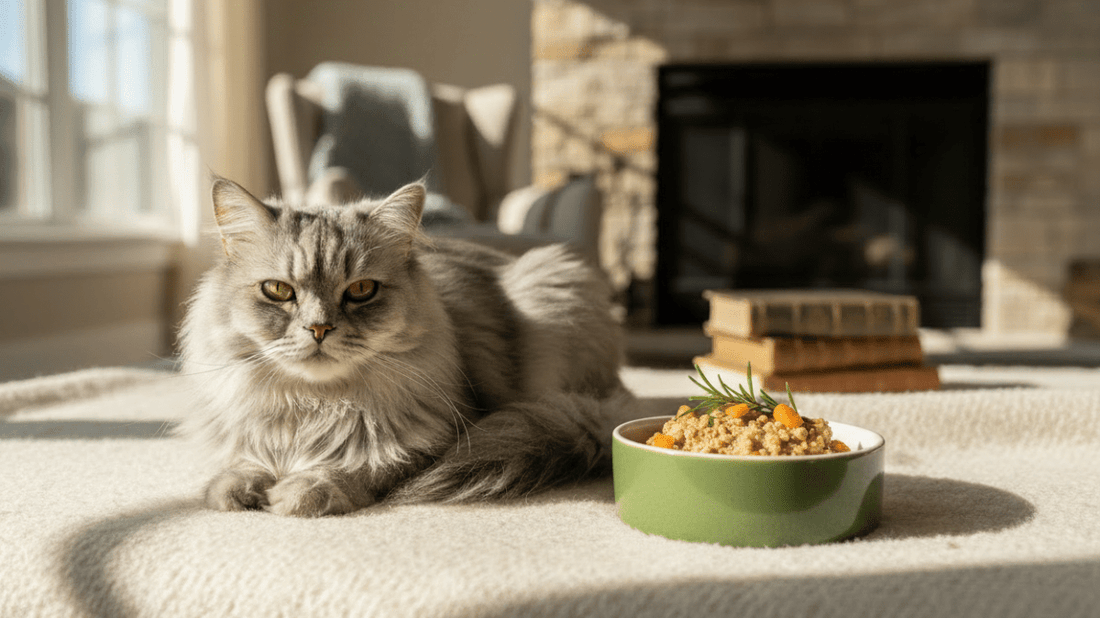
Choosing food for a senior cat is less about finding one “perfect” formula and more about matching the diet to the individual cat. Age, weight, muscle condition, dental health, appetite and any diagnosed medical conditions all matter.
Cats are often considered senior from around 11 years of age, although ageing is gradual and every cat is different. Some older cats maintain their weight easily, while others lose muscle, develop a smaller appetite or need a therapeutic veterinary diet.
This guide explains what to look for in senior cat food, which changes deserve a veterinary check and how dental comfort can affect nutrition.
Key takeaways
- Choose a complete and balanced food suited to your cat’s life stage and health.
- Monitor body weight, muscle condition, appetite, thirst and toileting habits.
- Do not restrict protein, phosphorus or sodium unless your vet recommends it for a diagnosed condition.
- Wet food can contribute moisture, but the best diet depends on the individual cat.
- Dental pain can affect eating, so oral health should be part of senior nutrition planning.
How senior cats’ nutritional needs change
Ageing cats can experience changes in appetite, digestion, activity and body composition. Some gain weight as they become less active, while others lose weight and muscle despite eating normally.
Unexpected weight loss is not a normal part of ageing. It can be associated with dental pain, thyroid disease, kidney disease, diabetes, digestive problems or other conditions. Arrange a veterinary assessment if your cat’s appetite, weight, thirst, urination or behaviour changes.
Your vet can assess body condition and muscle condition separately. A senior cat may maintain the same overall weight while losing muscle, so regular hands-on checks are useful.
What to look for in senior cat food
Complete and balanced nutrition
Look for food labelled as complete and balanced for your cat’s life stage. This indicates that it is intended to provide the nutrients required as a main diet. Complementary foods and treats should not make up the bulk of the diet.
Appropriate protein and energy
Older cats still need protein to maintain muscle. Protein should not be restricted simply because a cat is senior. The appropriate amount and source depend on the cat’s health, and cats with a diagnosed medical condition may need a diet selected by their vet.
Energy needs also vary. A less active cat may require careful portion control, while an underweight cat may need a more energy-dense or highly palatable diet.
Fats and essential nutrients
Dietary fat provides energy and supports palatability. Complete cat foods also contain essential nutrients such as taurine, vitamins, minerals and fatty acids in appropriate amounts. Avoid judging a food by one fashionable ingredient or a “human-grade” claim alone.
Wet food, dry food and hydration
Wet food contributes moisture and may be easier for some senior cats to eat. Dry food can be convenient and nutritionally complete, but standard biscuits should not be treated as a guaranteed way to clean teeth.
Some cats eat wet food, dry food or a combination. The best choice depends on preferences, dental comfort, body condition and medical needs. Keep fresh water available and clean bowls regularly.
A sudden preference for softer food can be a sign of dental pain rather than simple fussiness. Ask your vet to check your cat’s mouth if chewing habits change.
When a therapeutic diet may be needed
Cats with chronic kidney disease, urinary disease, diabetes, food-responsive conditions or other diagnosed health problems may benefit from a therapeutic veterinary diet.
Do not reduce phosphorus, sodium or protein without veterinary advice. Restricting nutrients unnecessarily can make a diet unsuitable, particularly if the cat is already losing weight or muscle.
Transition foods gradually unless your vet gives different instructions. If your senior cat refuses food, contact your veterinary clinic rather than waiting for them to become very hungry.
Dental health and eating
Dental disease can make eating uncomfortable and may contribute to weight loss. Up to 85% of cats over the age of three develop some form of dental disease, so older cats need regular oral assessments.
Arrange a veterinary check if you notice persistent bad breath, red or bleeding gums, drooling, dropping food, chewing on one side, facial swelling or reduced appetite.
Home care can support oral health, but it cannot remove hardened tartar or treat a painful tooth. Professional dental treatment may be needed before changing food texture or beginning a new home routine.
How Purrlys® fits into the routine
Purrlys® Premium Oral Dental Probiotic for Cats is an odourless, tasteless powder made in Australia in a human-grade facility. It supports the oral and gut microbiomes and helps protect teeth and gums from plaque and harmful bacteria.
Sprinkle Purrlys® into your cat’s wet food and mix well, twice daily. Introduce it gradually over 6–8 days depending on stomach sensitivity.
The amount varies according to age and stage of introduction. Follow the age-specific directions for using Purrlys® rather than relying on a universal scoop amount.
You should notice an improvement in your cat’s breath after 2 weeks of consistent use. Plaque and gum improvements may take 4–6 weeks. Results vary, and Purrlys® cannot remove hardened tartar or replace veterinary treatment.
Speak with your vet before using Purrlys® if your senior cat has chronic kidney disease, thyroid disease or follows a therapeutic veterinary diet.
Practical feeding tips for senior cats
- Measure portions rather than topping up the bowl automatically.
- Weigh your cat regularly and record unexpected changes.
- Serve food in a quiet, accessible location away from the litter tray.
- Use shallow bowls if bending or whisker contact seems uncomfortable.
- Warm wet food slightly to enhance its aroma, checking that it is not hot.
- Make food and water easy to reach for cats with reduced mobility.
- Contact your vet promptly if your cat stops eating or appetite remains reduced.
Frequently asked questions
What age is a cat considered senior?
Cats are commonly considered senior from around 11 years, but ageing is gradual. Veterinary care and feeding decisions should be based on the individual cat rather than age alone.
Do senior cats need less protein?
Not automatically. Older cats need protein to maintain muscle. Cats with a diagnosed medical condition may need a tailored diet, so make changes with veterinary guidance.
Is wet food better for senior cats?
Wet food contributes moisture and can be easier to eat, but it is not automatically the best choice for every cat. Choose a complete diet suited to your cat’s preferences, body condition and health.
Should I switch food if my cat has kidney disease?
Speak with your vet. A therapeutic kidney diet may be recommended after diagnosis, but the transition and feeding plan should reflect your cat’s appetite, weight and test results.
What if my senior cat will only eat soft food?
Arrange a dental and health check. A new preference for soft food can be associated with dental pain or another medical issue.
Can Purrlys® be mixed with dry food?
The approved delivery method is to sprinkle it into wet food and mix well, twice daily. Follow the full directions for gradual introduction and age-specific amounts.
Supporting your senior cat at mealtimes
The best senior diet is one that is nutritionally complete, appropriate for your cat’s health and enjoyable enough to eat consistently. Monitor changes, keep veterinary checks up to date and avoid making medical diet decisions from age alone.
If a brush-free addition suits your cat’s oral-care routine, learn more about Purrlys® Premium Oral Dental Probiotic for Cats and follow the gradual introduction directions.