
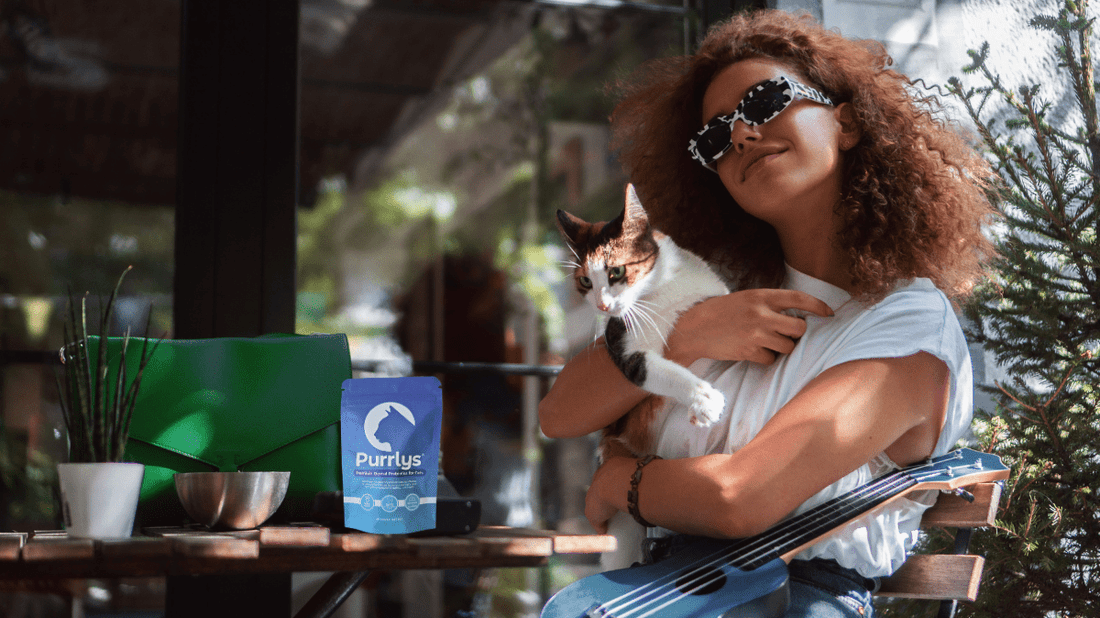
Plaque is a soft film on your cat’s teeth. If it hardens into tartar, home brushing, treats and powders cannot remove it. The best place to start is a veterinary dental check, particularly if you notice bad breath, red gums or a change in how your cat eats.
Up to 85% of cats over the age of three develop some form of dental disease. A consistent home routine can support oral health, but no brush-free product guarantees plaque removal or prevents a professional procedure.
Key takeaways
- Brushing with cat-safe toothpaste helps remove soft plaque when tolerated.
- Hardened tartar and painful teeth need veterinary assessment.
- A powder can support an oral-care plan but cannot replace brushing or cleaning.
- Purrlys® is mixed into wet food twice daily according to age-specific directions.
Plaque versus tartar
Soft plaque forms on teeth and can harden over time. Tartar is a hard deposit that needs professional assessment and, when indicated, removal by your vet. You cannot tell the full extent of dental disease by looking at the visible teeth. Do not scrape a cat’s teeth at home or assume a powder will dissolve tartar.
Signs to watch for
Persistent bad breath, red or bleeding gums, drooling, food dropping from the mouth, changed chewing or pawing at the face deserve veterinary advice. Cats may keep eating despite pain. A brief lip lift while your cat is relaxed can help you notice changes, but do not force their mouth open. Seek prompt advice if your cat stops eating.
Gentle brushing
Ask your vet whether brushing is appropriate, especially if your cat already seems sore. Introduce a cat-safe toothbrush and toothpaste gradually with short, positive sessions. Never use human toothpaste. Brushing can help remove soft plaque where you can reach, but do not brush an acutely painful mouth or expect it to remove existing tartar.
Other home-care options
Some purpose-made dental diets, treats or other products may be useful for a particular cat. Check the product’s specific claim and ask your vet for advice. Ordinary dry food does not reliably clean teeth, and a supplement’s microbiome mechanism does not establish that it physically removes plaque. Fresh water supports general wellbeing but is not a dental cleaning.
Where Purrlys® fits
Purrlys® Dental Probiotic is a tasteless, odourless powder that supports oral and gut microbiomes and helps protect teeth and gums from plaque and harmful bacteria. It is supportive care, not a physical plaque-removal method or a substitute for veterinary treatment.
Sprinkle into your cat’s wet food and mix well, twice daily. Introduce gradually over 6–8 days, allowing longer for a sensitive stomach. Follow age-specific directions on the How Purrlys® Works page. Consult your vet before use if your cat has chronic kidney disease, thyroid disease or eats a therapeutic veterinary diet.
You should notice an improvement in breath after 2 weeks of consistent use. Plaque and gum improvements may take 4–6 weeks; results vary. Bad breath that persists still calls for a vet check. Learn more about Purrlys®.
Frequently asked questions
Can I remove cat tartar at home?
No. Ask your vet about hardened deposits and whether a professional procedure is needed.
Can powder remove soft plaque instead of brushing?
Do not assume it does. Brushing mechanically removes soft plaque when tolerated. A probiotic powder can support care, but is not an equivalent cleaning method.
What if my cat will not tolerate brushing?
Do not force a sore or frightened cat. Ask your vet about gradual training and suitable purpose-made options.
How long might Purrlys® take?
Breath improvement is expected after 2 weeks of consistent use. Plaque and gum improvements may take 4–6 weeks; results vary.
How much does a professional clean cost?
Costs vary by clinic and your cat’s needs, including anaesthesia, imaging and any extractions. Ask your vet for a tailored estimate.
Is bad breath always dental disease?
No, it can have multiple causes. Persistent or unusual breath warrants veterinary assessment.