
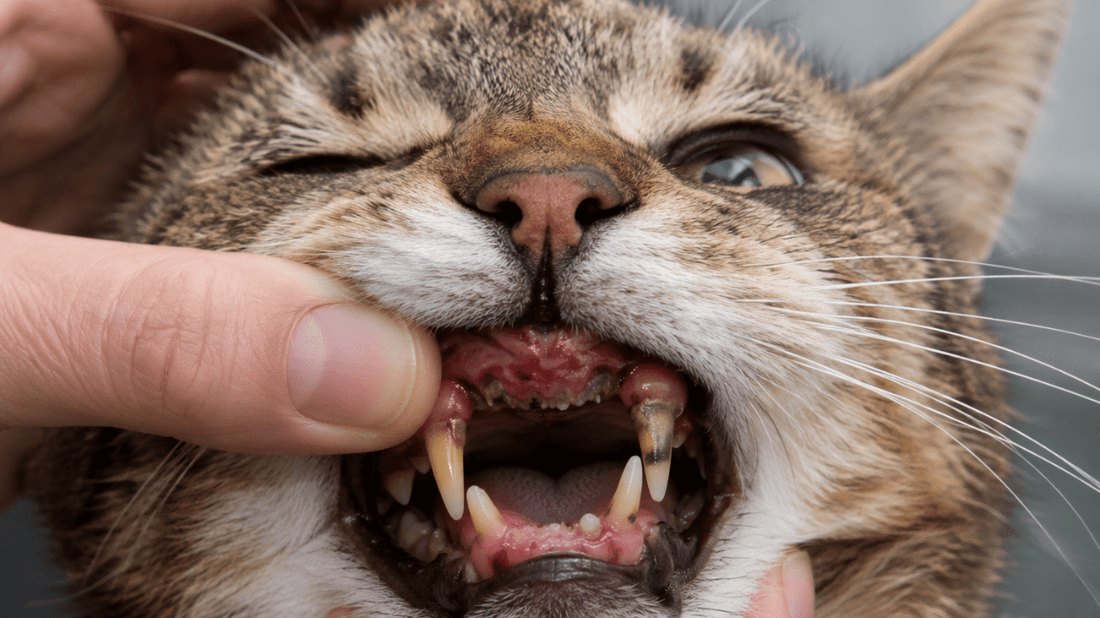
Cats are very good at hiding a sore mouth, so the signs of dental problems in cats can be easy to miss. If you've noticed a change in your cat's breath or the way they eat, you're right to take a closer look. And if your cat won't let a toothbrush anywhere near them, keeping their teeth healthy can feel like a daily battle.
Australian vets find some level of dental disease in 80% of cats and dogs over the age of three, according to the Australian Veterinary Association, so it's well worth knowing what to look for. Here are the signs to watch for, a gentle way to check your cat's teeth at home, and an easy daily routine that supports their oral health.
Key takeaways
- Cats often hide dental pain, and some show very few signs at all.
- Seven signs to watch for, from bad breath to messy eating.
- A calm weekly look at home helps you spot changes early.
- A brush-free daily routine with Purrlys® supports your cat's oral health between vet visits.
Why cats hide dental problems
Your cat might seem perfectly happy chasing a toy or napping in the sun while quietly putting up with a sore mouth. International Cat Care notes that some cats show no signs at all, yet have severe dental disease.
Many cat parents assume that if their cat is still eating, their mouth must feel fine. But a cat with sore gums may simply change how they eat, turning their head to one side while chewing or preferring soft food, as the Cornell Feline Health Center explains.
Cornell names the three most common dental problems in cats as gingivitis, periodontitis and tooth resorption. Gingivitis is inflammation of the gums, and it usually starts with plaque. Periodontitis is when the tissues that support the teeth become affected. Tooth resorption, where the tooth structure breaks down, is the most common cause of tooth loss in cats.
7 signs of dental problems in cats
- Bad breath that doesn't go away. The most common cause of bad breath in cats is gum disease from plaque and tartar build-up, according to the vets at VCA Animal Hospitals.
- Red or bleeding gums. Healthy gums are an even pink. A red line where the tooth meets the gum is a sign of inflammation.
- Tartar. International Cat Care describes it as a cream, yellow or brown hard deposit on the tooth surface.
- Changes in eating. Chewing on one side, dropping food, preferring soft food or eating less.
- Pawing at the mouth. Head shaking or jaw chattering can be signs of mouth discomfort too, the vets at VCA explain.
- Drooling. More dribble than usual can be a sign of sore gums.
- Weight loss or a grumpier cat. A cat with a sore mouth may eat less and be more irritable than usual.
If you notice any of these, have your vet take a look. If your cat stops eating or seems to be in pain, please take them to your vet today. When you book, ask for an estimate for your cat. Our guide to cat dental cleaning costs in Australia explains what's usually involved.
How to check your cat's teeth at home
Checking your cat's mouth doesn't have to be a wrestling match. A quick look once a week helps you notice changes early. Choose a time when your cat is relaxed or sleepy, and have a favourite treat ready.
- Step 1: Start with head and chin rubs. Gently stroke their cheeks to relax the jaw.
- Step 2: Slowly lift the side of the upper lip. You only need a small window to see the canines and the teeth further back. Never force their mouth open.
- Step 3: Look at the edge of the gumline. Healthy gums are a soft, even pink, with no red line and no hard build-up on the teeth.
Finish with the treat, so next time is even easier. A home check doesn't replace your vet's, but it's a lovely way to keep an eye on things.
The mouth, the gut and why brushing falls short
Your cat's mouth is the start of their digestive tract, and the bacteria in the mouth and gut are connected. That's why at Purrlys we look at oral health as part of your cat's whole wellbeing.
Brushing can help, if your cat will let you. Brushing removes soft plaque by rubbing it off, and plaque starts building up again soon afterwards. Purrlys works differently. It builds a protective biofilm over teeth and gums that crowds out plaque-causing bacteria and helps reduce plaque build-up at the source.
A gentle daily routine with Purrlys®
Purrlys® Premium Dental Probiotics for Cats is an odourless and tasteless daily powder, developed by Australian microbiome scientists and backed by research, to support your cat's oral health. It's made from human-grade ingredients in a human-grade facility, and because it's tasteless, even fussy eaters tend to eat it without a second look.
Most dental care removes plaque after it has formed. Purrlys works at the root cause: the plaque-causing bacteria. Its beneficial bacteria form a protective biofilm over teeth and gums that crowds out plaque-causing bacteria and encourages the growth of beneficial oral bacteria. With daily use, it helps to reduce plaque and tartar build-up, supports fresher breath, supports healthy gums and supports gut health.
How to use it: Mix it well into wet food, morning and evening. Wet food helps spread the probiotics around the teeth and gums. Dry food tends to be crunched once and swallowed whole, with much of the powder left at the bottom of the bowl, and according to the Australian microbiome scientists who developed Purrlys®, the probiotics only last about six hours in water. Introduce it gradually, over 6 to 8 days for most healthy cats and up to two weeks for sensitive or senior cats, as International Cat Care recommends for any change to your cat's food. The directions for adult cats and kittens are on the How Purrlys® Works page. If your cat has a pre-existing health condition, such as kidney or thyroid disease, or eats a therapeutic diet, check with your vet before starting.
What to expect: Fresher breath comes first, within two to four weeks of being on the full dose. Helping to reduce plaque and tartar build-up, and supporting healthy gums, can take up to 12 weeks, and every cat is different.
Why every day matters: Dental care isn't a one-off. Just like brushing our own teeth, it's every day, for life. Daily use is what keeps the protective biofilm strong.
Frequently asked questions
Is bad breath in cats normal?
A strong smell straight after a fishy meal is nothing to worry about. Breath that stays strong is often one of the first signs of dental problems in cats, and it's worth a vet check.
Can I use human toothpaste for my cat?
No. Human toothpaste isn't safe for cats, as Cornell explains. Choose a toothpaste made for cats, or a brush-free option like Purrlys, which mixes into wet food.
What are the first signs of gingivitis in cats?
Usually a thin red line where the teeth meet the gums. Some cats also develop bad breath or start preferring soft food.
Do dental treats work for plaque?
Some dental treats help with plaque as your cat chews, but they don't suit every cat. Purrlys works differently, at the root cause: the plaque-causing bacteria. Our guide to cat dental treats vs powder compares the two.
How often should a cat have a dental check-up?
International Cat Care suggests a vet dental check at least once every 12 months, and every three to six months for cats who have had dental problems, depending on their condition.
Are some cats more prone to dental problems?
Cornell notes that tooth crowding can contribute to plaque build-up, and International Cat Care lists tooth alignment and genetics among the factors that can affect dental disease. Your vet can tell you what suits your cat.
Keeping an eye out for the signs is one of the kindest things you can do for your cat, and before long caring for their teeth will just be part of mealtimes.
Purrlys® supports daily oral care between vet visits. It isn't a replacement for veterinary care. If you notice red or bleeding gums, drooling, or your cat avoiding food, please see your vet.